
Environmental Monitoring
Measurements residents can see, and an administration that has to act on them.
Air, noise and water data are usually published and left there. Environmental Monitoring ties the measurement to a response: an exceedance raises a case on the department that owns it, the intervention is recorded, and the public page shows both the reading and what was done about it.
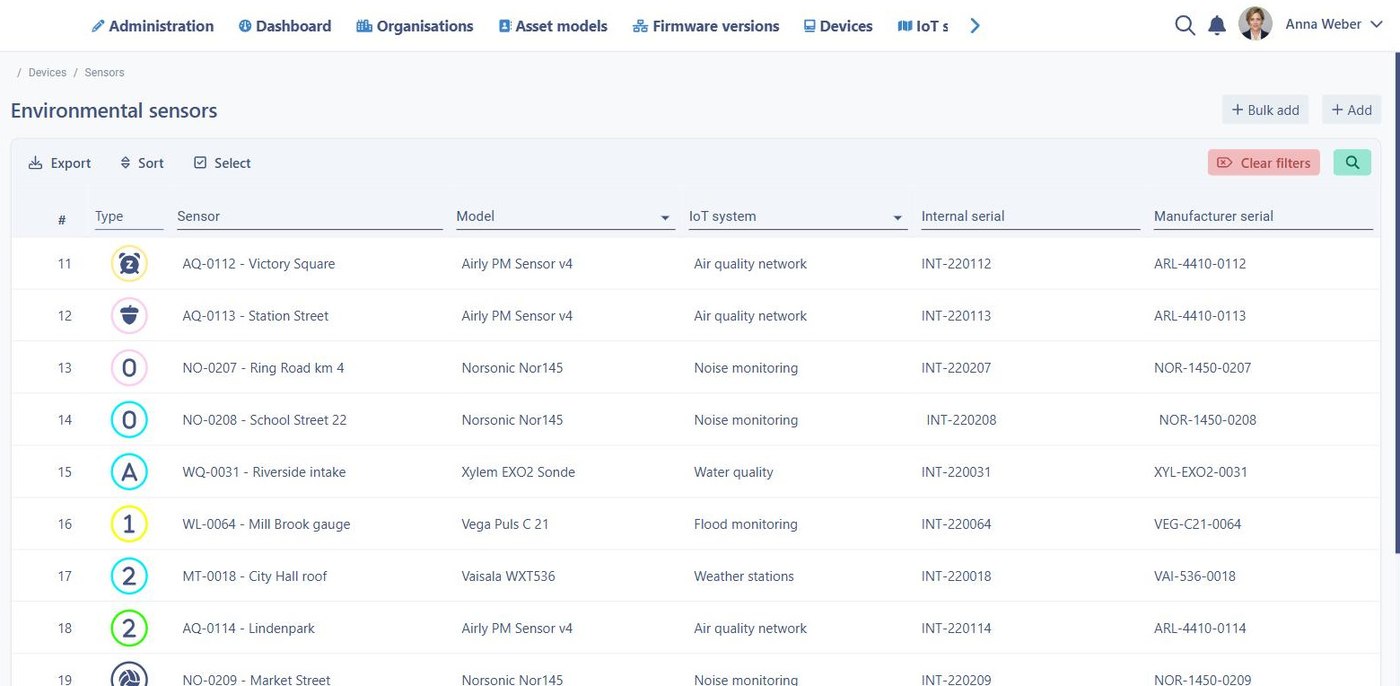
Monitoring stations with current readings, validated history and the exceedances recorded against them.
What changes
Measurement with a response
An exceedance opens a case with an owner and a deadline, not just a red number on a chart.
Data people trust
Readings are validated against calibration and sensor health before they are published, so a faulty probe does not become a public claim.
Reporting without assembly
Regulatory and council reporting is generated from the stored series instead of being rebuilt in a spreadsheet each period.
Key capabilities
Air quality
Particulates and gases per station, with the index the city publishes and the raw values behind it.
Noise
Continuous and event-based noise measurement, with the thresholds that apply by zone and by hour.
Water
Quality and level measurement on the networks and water bodies the city is responsible for.
Weather
Local conditions used both for public information and for operational decisions such as winter service.
Exceedances
Threshold breaches raise a case, notify the responsible department and stay on the record.
Public publication
A public view of the validated data, with the methodology and the station metadata alongside it.
How it works
Establish the network
Stations and sensors are registered with their location, parameters and calibration schedule.
Collect and validate
Readings are stored as a series and checked against sensor health before they count.
Respond to exceedance
A breach opens a case on the department that can act, with the reading attached.
Publish and report
Validated data goes to the public view and into the periodic reports.
Keep the history
The series, the exceedances and the interventions stay together for trend and for audit.
Environmental Monitoring works with the systems your city already runs.
Air, noise and water sensor networks, national monitoring feeds, SCADA and utility telemetry, GIS, open data portals, case and work order management.
Related solutions
Urban IoT
The device registry, connectivity and rules behind the measurements.
Learn more →Utilities Operations
Networks whose condition the water and wastewater readings describe.
Learn more →Data & Performance
Trend, reporting and the public view of what the numbers mean.
Learn more →See an exceedance become a case
We will push a station past its threshold and follow the case, the response and the published record.